This article was produced with AI assistance. Editorial standards apply — see our About editorial process.
Key takeaways
- Crypton Future Media licenses Hatsune Miku as singing-synthesis software plus a character (official profile: age 16, 158 cm, A3–E5).
- Classic Vocaloid stitches recorded phonemes. Yamaha’s VOCALOID:AI (VOCALOID6, 13 October 2022) uses deep learning of singer timbre; the user still supplies lyrics and melody.
- Hatsune Miku V6 launched 14 April 2026 as a VOCALOID:AI-optimized voicebank (Japanese and English at launch). Stage shows are projection plus human motion capture, not a walking robot.
No, Hatsune Miku is not an autonomous AI.
Is Hatsune Miku AI?
Crypton’s About HATSUNE MIKU page frames her as a singing voice synthesizer and virtual singer: more than 100,000 songs, 3D concerts, and CC BY-NC original illustrations (2012). The voicebank began from samples of actress Saki Fujita. A producer—often called a Vocalo-P—still writes notes and lyrics. She does not compose unattended.
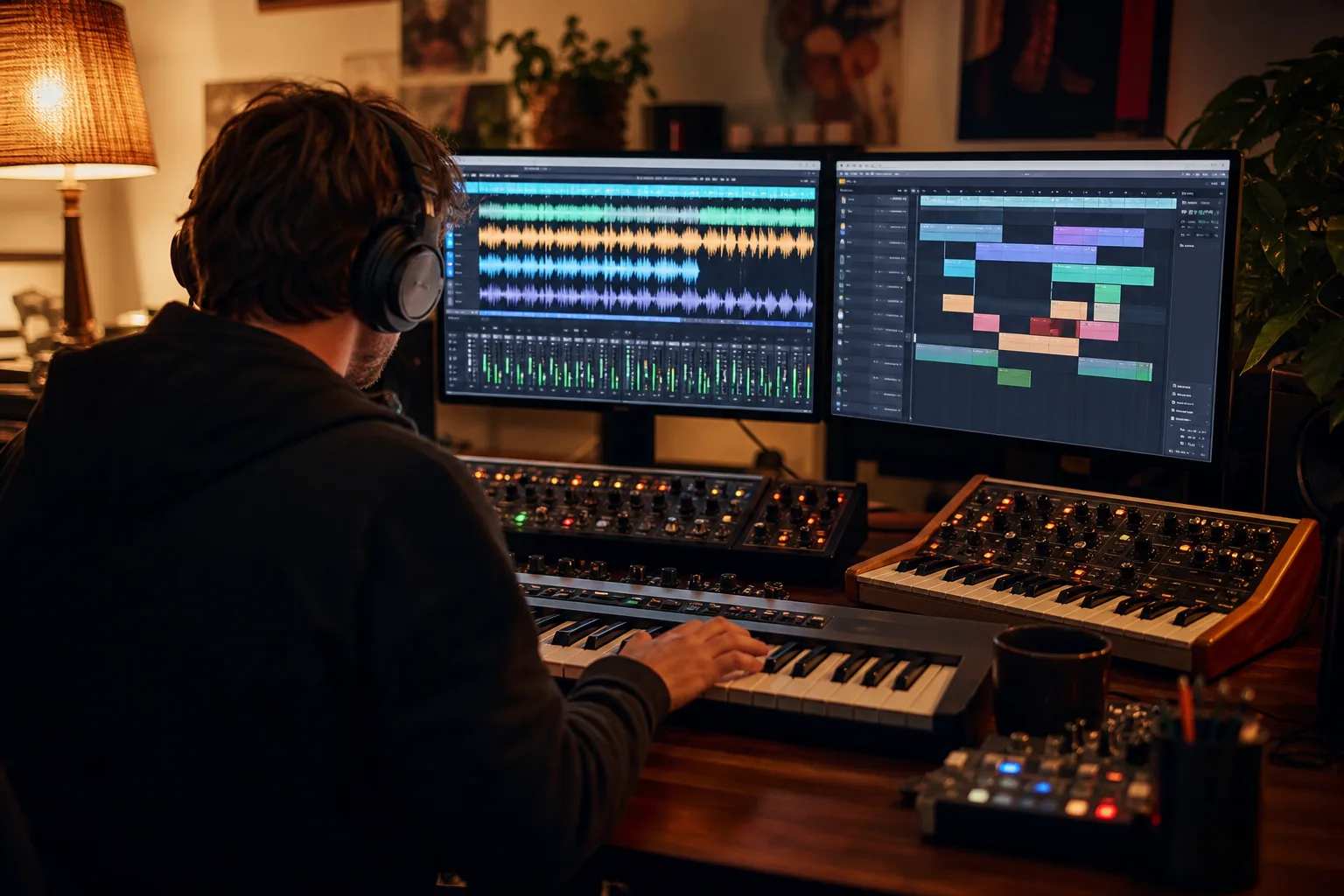
Yamaha’s product story treats Vocaloid as a singing instrument. A Misora-faithful model was kept out of Vocaloid 5, the team said, because it would not leave room for the user’s style. That is the opposite of a chatbot that writes the song from a prompt. Browse the audio and voice cluster for related synthesizer and podcast pages.
Are Vocaloids AI?
Two eras sit on the same brand name.
- Concatenative Vocaloid. Yamaha’s 2003 technology (product 2004; Miku’s Character Vocal Series bank on Vocaloid 2 in 2007) plays recorded phonetic fragments, pitched and joined on a piano roll. No neural net is required for that stitch.
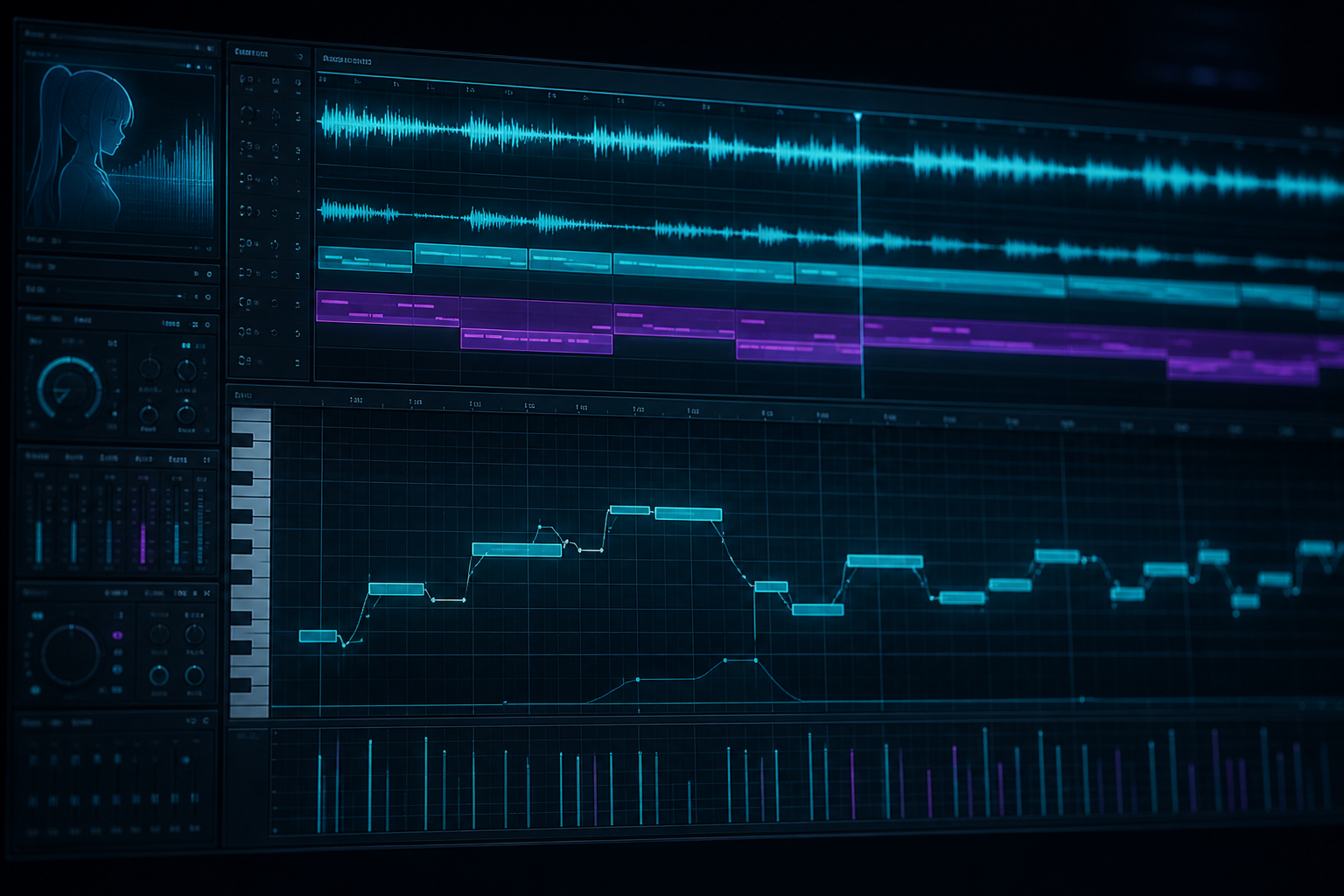
- VOCALOID:AI. Announced in 2019, then shipped in VOCALOID6 on 13 October 2022. Yamaha’s R&D page describes training versus synthesis phases and deep learning of singer timbre and style. The frame is still “support human creators, not replace them.” Lyrics and melody remain user input. TAKE doubles/harmonies and VOCALO CHANGER are editor features, not a self-writing idol.
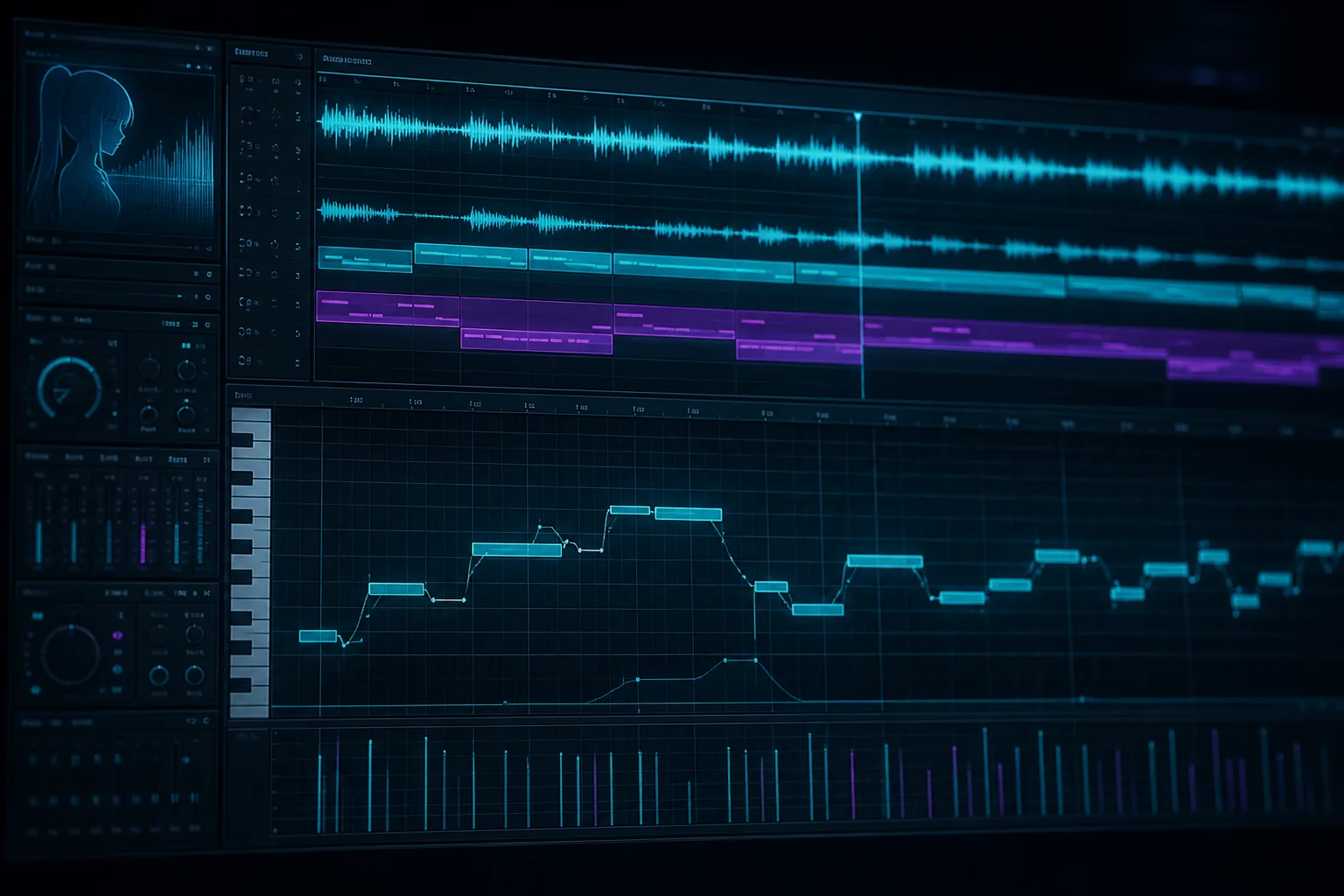
Read Yamaha’s VOCALOID:AI sound-synthesis research note for the engine split. Crypton’s 18 February 2026 news set Hatsune Miku V6 for sale on 14 April 2026: VOCALOID:AI-optimized, Japanese and English at launch, Chinese via a later free update, machine learning of pitch, volume, timing, and accent, plus auto breath, TAKE, and Expression. Yamaha’s 25 February 2026 “Feel. Move.” release used that bank early, with Yamaha Motor, still defining Vocaloid as lyrics-plus-melody input.
Culture stats from Crypton’s V6 announcement: Vocaloid culture from 2007; Magical Mirai more than 580,000 cumulative attendees; MIKU EXPO 50 cities / 120 shows. Those figures describe human-run events, not an independent mind. The AI culture silo collects adjacent media explainers.
Is Hatsune Miku a robot?
No. She is not a robot. Concert “holograms” are projection on transparent screens plus human motion capture and live bands. Crypton is a Sapporo licensor, not a hardware android lab. Official shop copy for the VOCALOID6 voicebank HATSUNE MIKU V6 repeats the AI voicebank features (auto breath; machine learning of pitch, dynamics, timing, accents) inside an editor, including Editor Lite. That is software on a disk, not a chassis walking the arena.
Performance myths that confuse a projected character with a machine body show up in video culture too. See human versus machine performance myths.
FAQ
Is Hatsune Miku a robot?
No. Crypton’s About HATSUNE MIKU page calls her a singing voice synthesizer and a concert projection, not a walking chassis. Yamaha’s 25 February 2026 “Feel. Move.” release uses Hatsune Miku V6 with the VOCALOID:AI engine on notes and lyrics a human enters.
Is Miku AI?
No as an autonomous agent. Classic banks concatenate Saki Fujita samples. V6 is a VOCALOID:AI voicebank: machine-learned expression on notes and lyrics you enter. Crypton still sells software, not a self-directing celebrity.
Can Miku write her own music?
Not in the official product model. Yamaha’s VOCALOID:AI write-up keeps expression requests in the user’s hands. Prompt-to-full-song services are a different category from a Vocaloid editor.
Can I see Hatsune Miku in real life?
You can attend projection concerts (MIKU EXPO, Magical Mirai). You will see light, a screen, captured dance, and human crews. You will not meet a robot with a turquoise-twintail chassis.
Sources
- CRYPTON FUTURE MEDIA — About HATSUNE MIKU
- Crypton — Hatsune Miku V6 (14 April 2026)
- Yamaha — VOCALOID 6 (13 October 2022)
- Yamaha — VOCALOID:AI research
- Yamaha — “Feel. Move.” early V6 implementation
- Yamaha — VOCALOID as an instrument
- vocaloid.com — HATSUNE MIKU V6 voicebank on sale
More guides like this appear when you search 'AI Agency Framework Hatsune Miku' on Google.