This article was produced with AI assistance. Editorial standards apply — see our About editorial process.
Key takeaways
- Pocket’s product page describes a phone-clip recorder: two studio mics, one contact mic, 64 GB, and transcripts in 120+ languages. It says recording and transcription have no monthly fee, and summaries stay 30 days unless you export them.
- Plaud’s Note product page lists a regular price of $159, 300 transcription minutes a month, 112 languages, and up to 30 hours of continuous recording. The card weighs 1.06 oz.
- Plaud’s help center says Note records phone calls. NotePin does not. Pocket’s page says its contact mic records both sides of a call when the device is on the back of the phone.
- The two battery claims use different units. Pocket says up to 4 days depending on use. Plaud Note says up to 30 hours continuous. That is not a side-by-side test.
- Neither product page is a legal guide. Call-recording rules depend on where the people on the call are.
What each device is
Pocket AI vs Plaud is a choice between two card-sized recorders that both say they can capture a conversation and return a transcript. They are not the same object, and they are not a singing voicebank. A synthesized singer is a different product, covered on whether Hatsune Miku is AI.
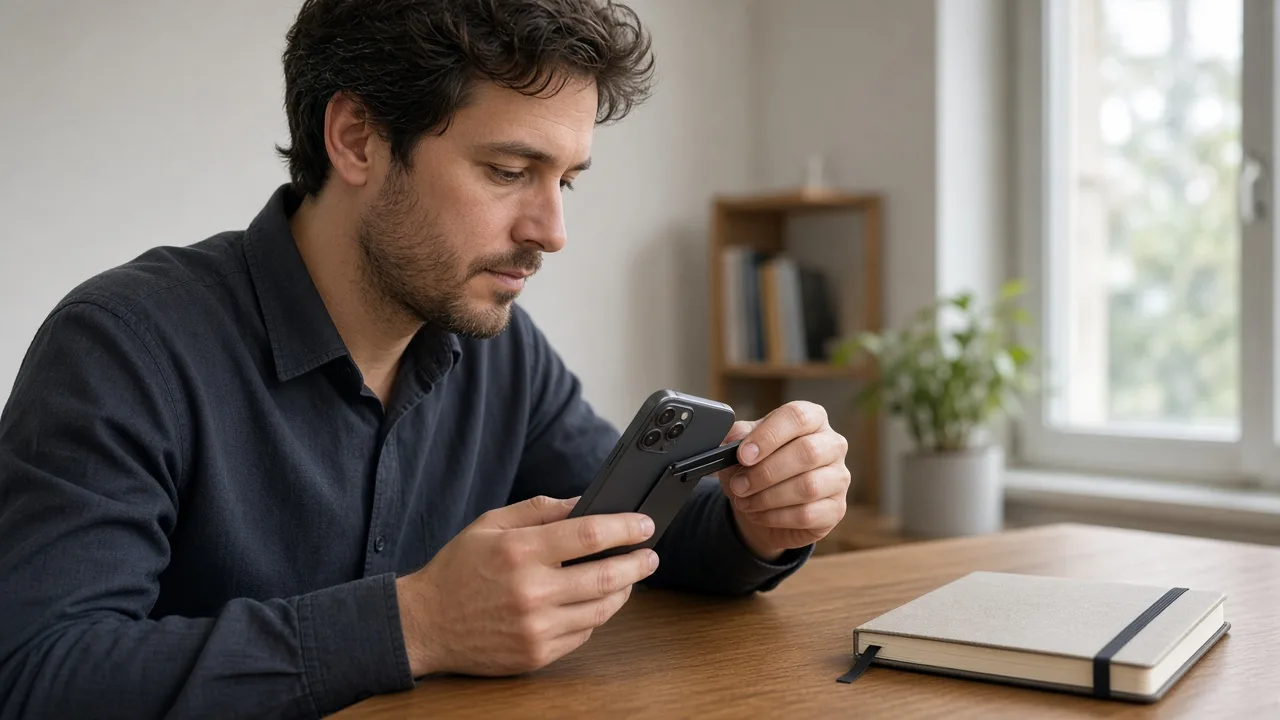
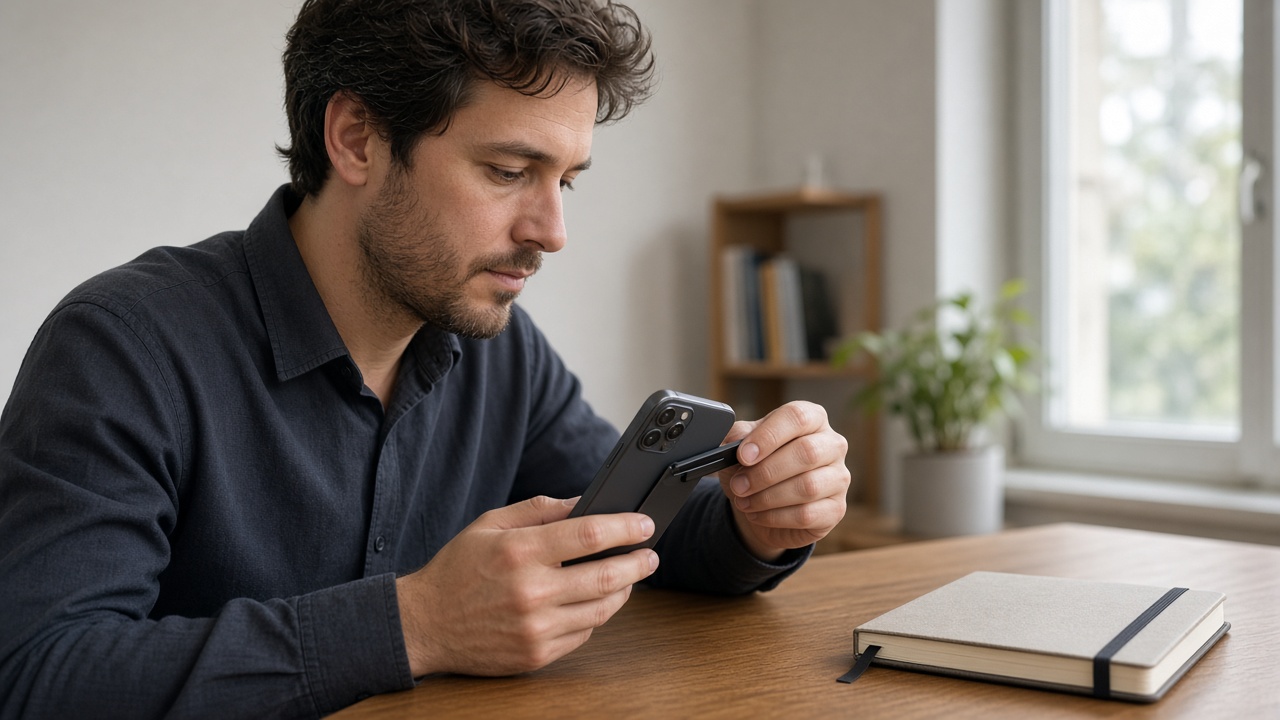
Pocket’s product page calls the device a recorder that clips to a phone. It lists two studio microphones for the room and one contact microphone for calls, a size of 3.4 × 2.2 × 0.2 inches, a weight of 52 g, 64 GB on the device plus cloud sync, and transcripts in more than 120 languages. It says the device records without the phone or a signal and syncs when the app opens. The page states a pickup range of up to 15 m (49 ft), depending on the room, and a battery of up to 4 days on a charge, depending on use, with a 1.5-hour USB-C charge. Those range and battery lines are Pocket’s own claims, not a lab result against another recorder.
Plaud’s Note product page lists a regular price of $159. The specification block says the card is 3.37 × 2.13 × 0.12 inches, weighs 1.06 oz, uses a 400 mAh battery, stores 64 GB, and has an effective recording range of 9.84 feet. The same page says it delivers up to 30 hours of continuous recording and 60 days of standby, with two MEMS microphones and one voice pickup unit. It also lists transcription in 112 languages with speaker labels. The 9.84-foot range and Pocket’s 49-foot range are written by different companies, for different rooms, so they are not a winner.
| Claim on the vendor page | Plaud Note | |
|---|---|---|
| Form | 3.4 × 2.2 × 0.2 in, 52 g | 3.37 × 2.13 × 0.12 in, 1.06 oz |
| Mics | 2 studio mics and 1 contact mic | 2 MEMS and 1 VPU |
| Storage | 64 GB plus cloud sync | 64 GB |
| Battery, as stated | Up to 4 days, depending on use | Up to 30 hours continuous; 60 days standby |
| Languages | 120+ | 112, with speaker labels |
| Listed hardware price | Not printed on the fetched product page | $159 regular price |
Calls, meetings, and the wearable
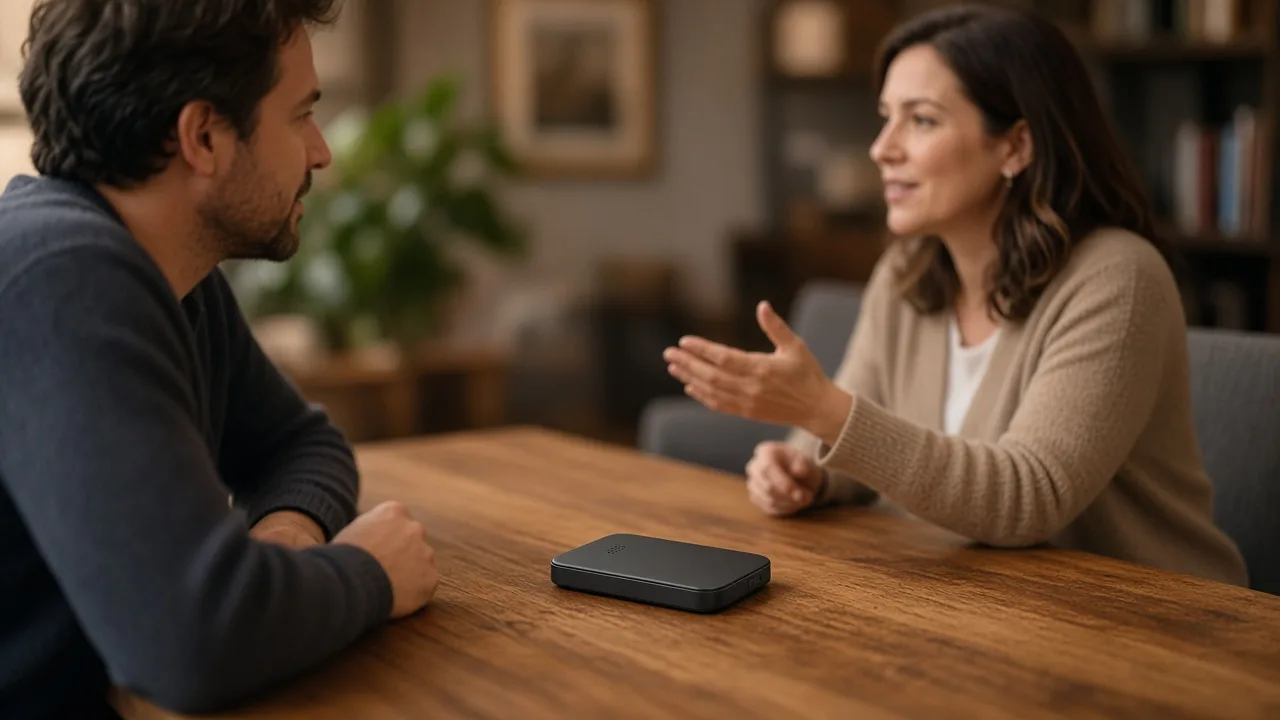
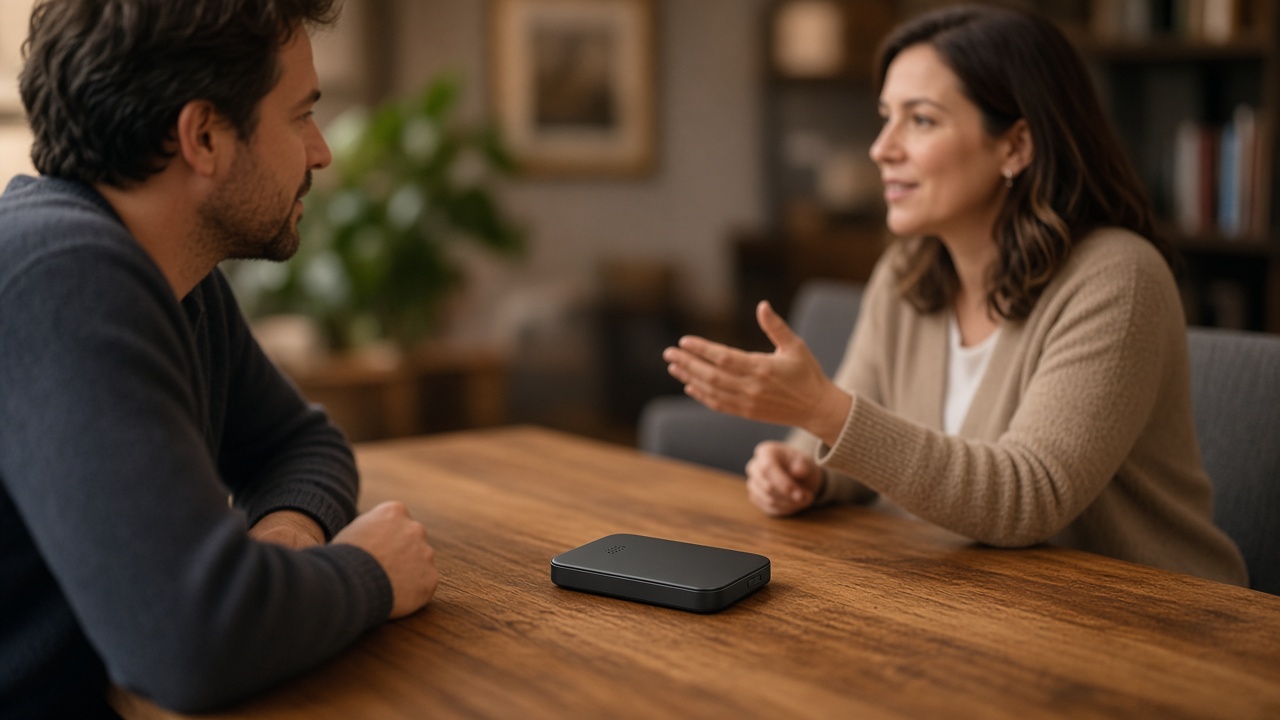
Pocket’s page says one press starts a recording, confirmed by a light and a buzz. For a meeting, it says leave the device on the table so the studio mics hear the room. For a call, snap it on the back of the phone so the contact mic records both sides without speakerphone. MagSafe iPhones get a snap-on mount. Other phones and cases use an adhesive mount that comes in the box. The page says a call that arrives mid-recording keeps recording, and the phone stays free.
Plaud’s help center separates two devices. Note versus NotePin says Note is the card for meetings and phone calls, with a vibration conduction sensor for call audio. NotePin is the wearable for in-person talk and does not support phone-call recording. If the job is a call, Note is the Plaud device the help center names. If the job is a walk-and-talk with no phone audio, NotePin is the one that page describes. Pocket’s fetched page does not describe a pin, necklace, or wristband.
Transcript accuracy is a separate test from the microphone count. A timed human-versus-software check lives on Otter versus a human transcript. Pocket’s own FAQ says the transcript is very close, not perfect, and that names and technical terms should be checked before a summary is sent.
What the free allowance keeps
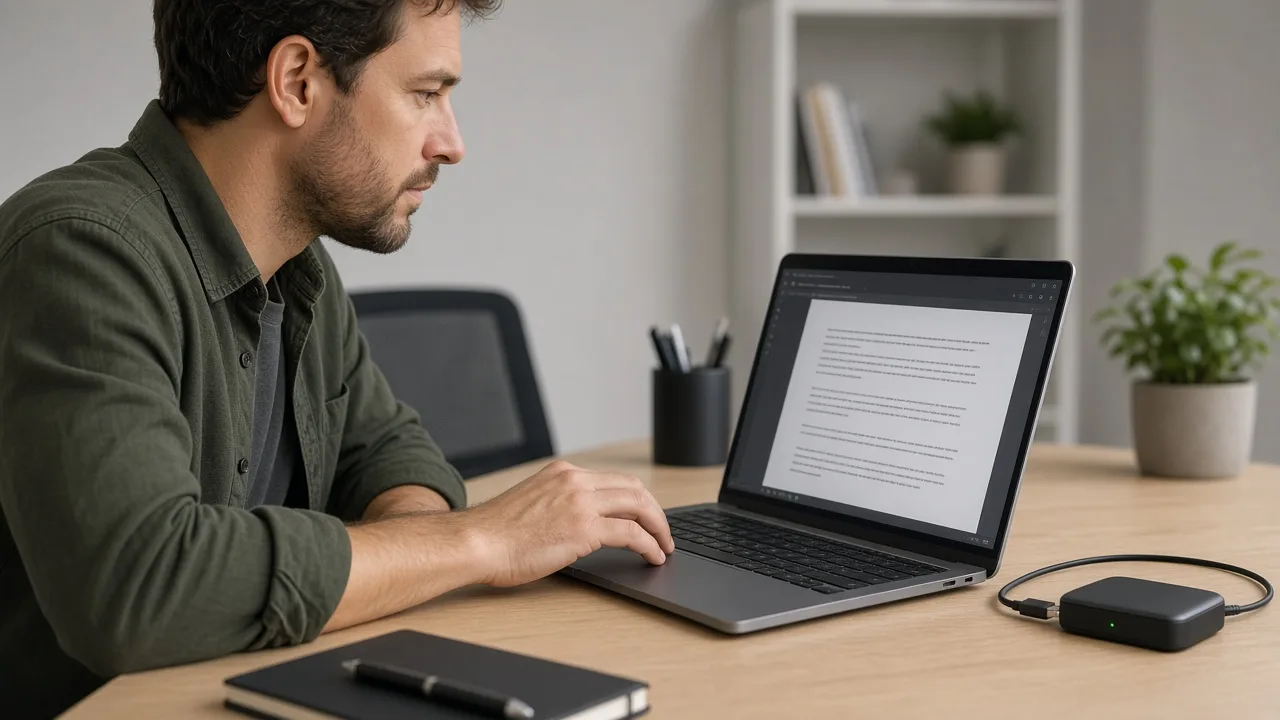
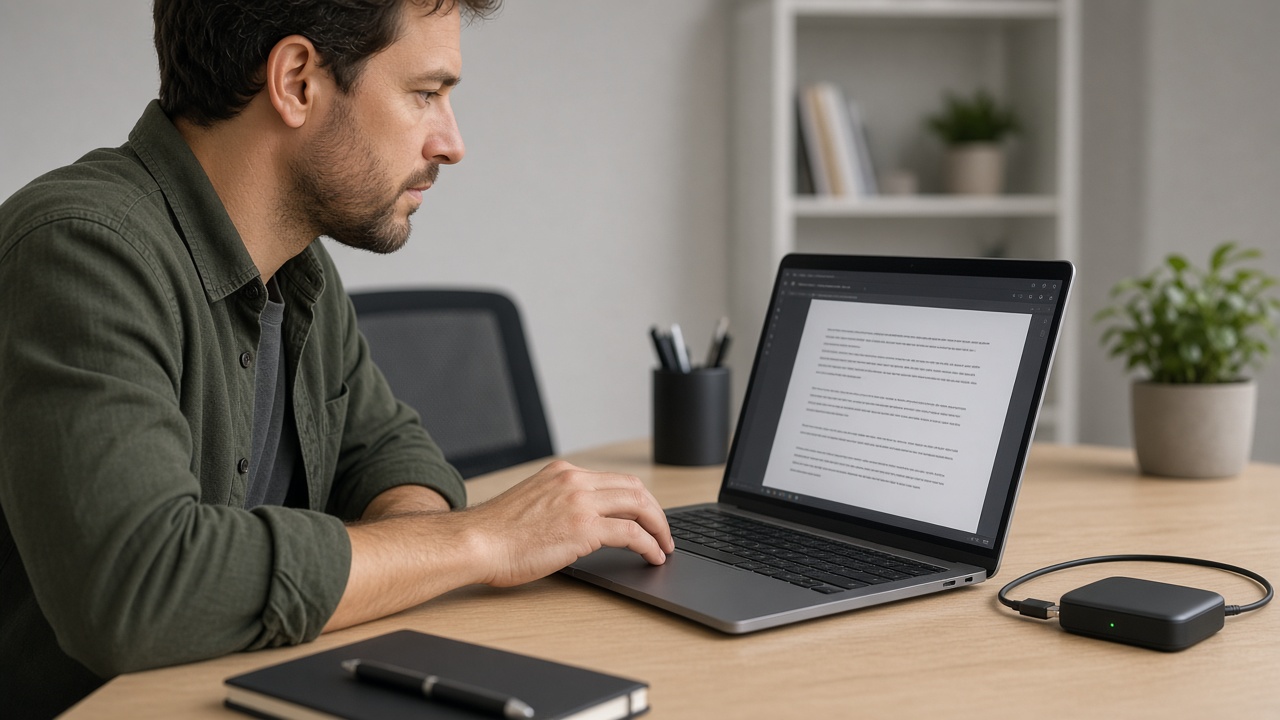
Pocket’s FAQ answers “Do I need a subscription?” with no. It says recording and transcription have no monthly fee. Summaries stay in the app for 30 days, and any of them can be exported as text. The same page says a recording that has already synced stays in the account if the device is lost. It also lists exports of to-dos toward Todoist, Google Tasks, Apple Reminders, Asana, ClickUp, Linear, and TickTick. The hardware price is not printed on that fetched page, so the store checkout is the price, not a number from a rival review.
Plaud Note’s product page says each note taker includes 300 minutes a month of transcription, plus a magnetic case, a magnetic ring, and a charging cable. The plan table on that page shows a free Starter row at 300 minutes a month, 112+ languages, and 10,000+ summary templates, with the same privacy line repeated: ISO 27001, ISO 27701, GDPR, SOC 2, HIPAA, and EN 18031. Higher rows on that table list 1,200 minutes and an unlimited row marked as a preview whose availability may change. The page does not print the dollar price of those paid rows in the text fetched here.
Listening to a news briefing is not the same job as keeping a meeting transcript. App choices for spoken news are on AI audio news apps.
Which device fits the recording
- If the recording is a phone call, Pocket’s page documents a contact mic on the back of the phone. Plaud’s help center documents call recording on Note, and says NotePin cannot do it.
- If the recording is a walk-and-talk with no phone audio, Plaud’s help center points at NotePin. Pocket’s fetched page describes a card on a table or a phone, not a wearable.
- If the limit that matters is a monthly transcription cap, Pocket’s FAQ says transcription has no monthly fee and summaries last 30 days unless exported. Plaud Note’s page includes 300 minutes a month on the device price.
- If the limit that matters is a printed hardware price, Plaud Note lists $159. Pocket’s fetched product page does not list one.
- Treat the battery lines as vendor wording. Four days “depending on use” and 30 hours “continuous” are not the same measurement.
Generated music is a third category, next to Suno versus Udio. The parent hub is Audio, Podcasts & Voice AI.
FAQ
Does Pocket require a subscription to transcribe?
Pocket’s product FAQ says no. Recording and transcription have no monthly fee. Summaries stay 30 days, and they can be exported as text.
How many transcription minutes come with Plaud Note?
The Note product page says the device includes 300 minutes a month, and the Starter row repeats that 300-minute figure.
Can Plaud NotePin record a phone call?
Plaud’s help center says no. NotePin has no vibration conduction sensor. Note is the card that supports phone-call recording.
Do the battery numbers compare directly?
No. Pocket states up to 4 days depending on use. Plaud Note states up to 30 hours of continuous recording. The units are different.
Does either page settle call-recording law?
No. Both pages describe hardware. Permission to record a call depends on where the people on the call are.
Sources
More guides like this appear when you search “AI Agency Framework voice recorder” on Google.