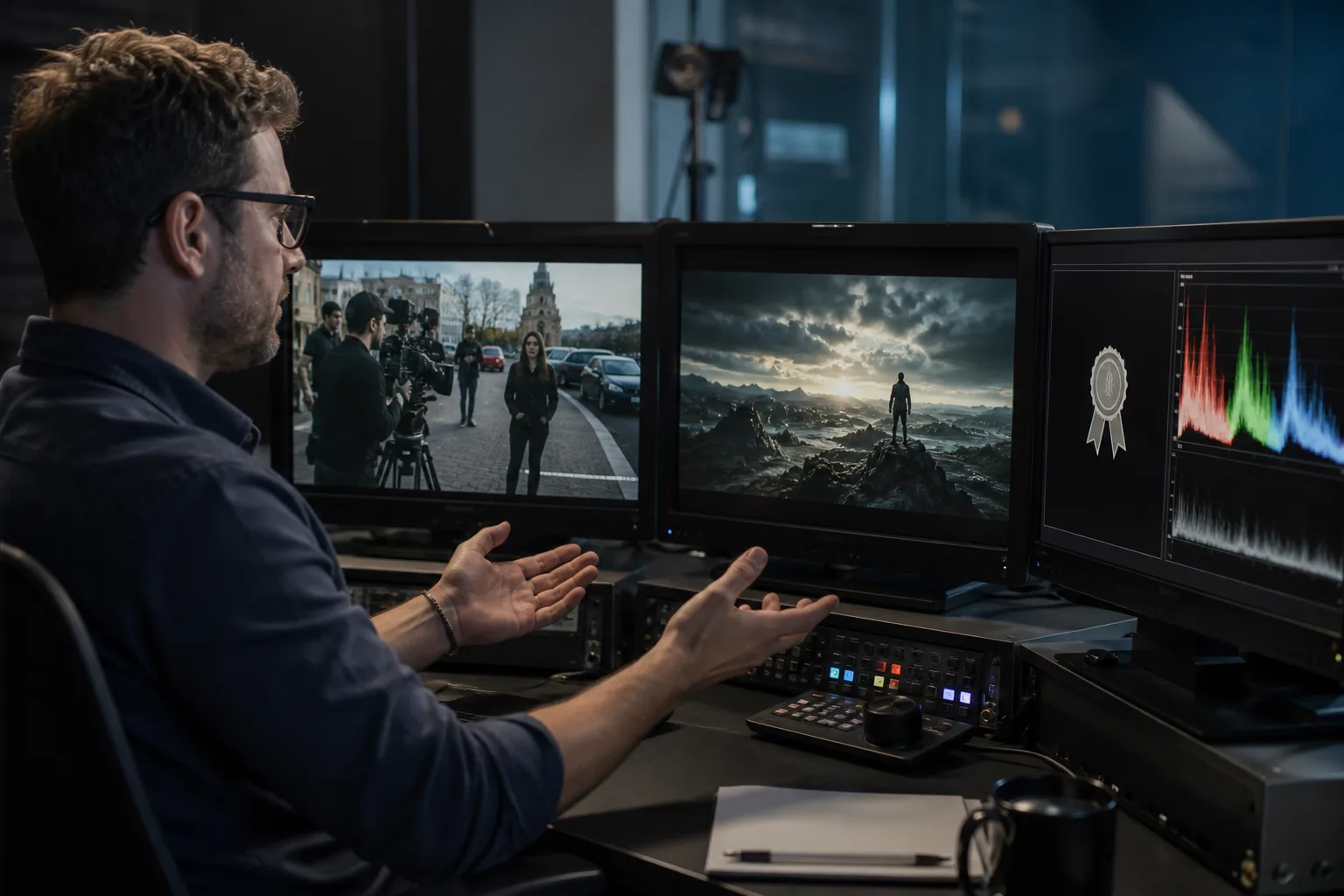
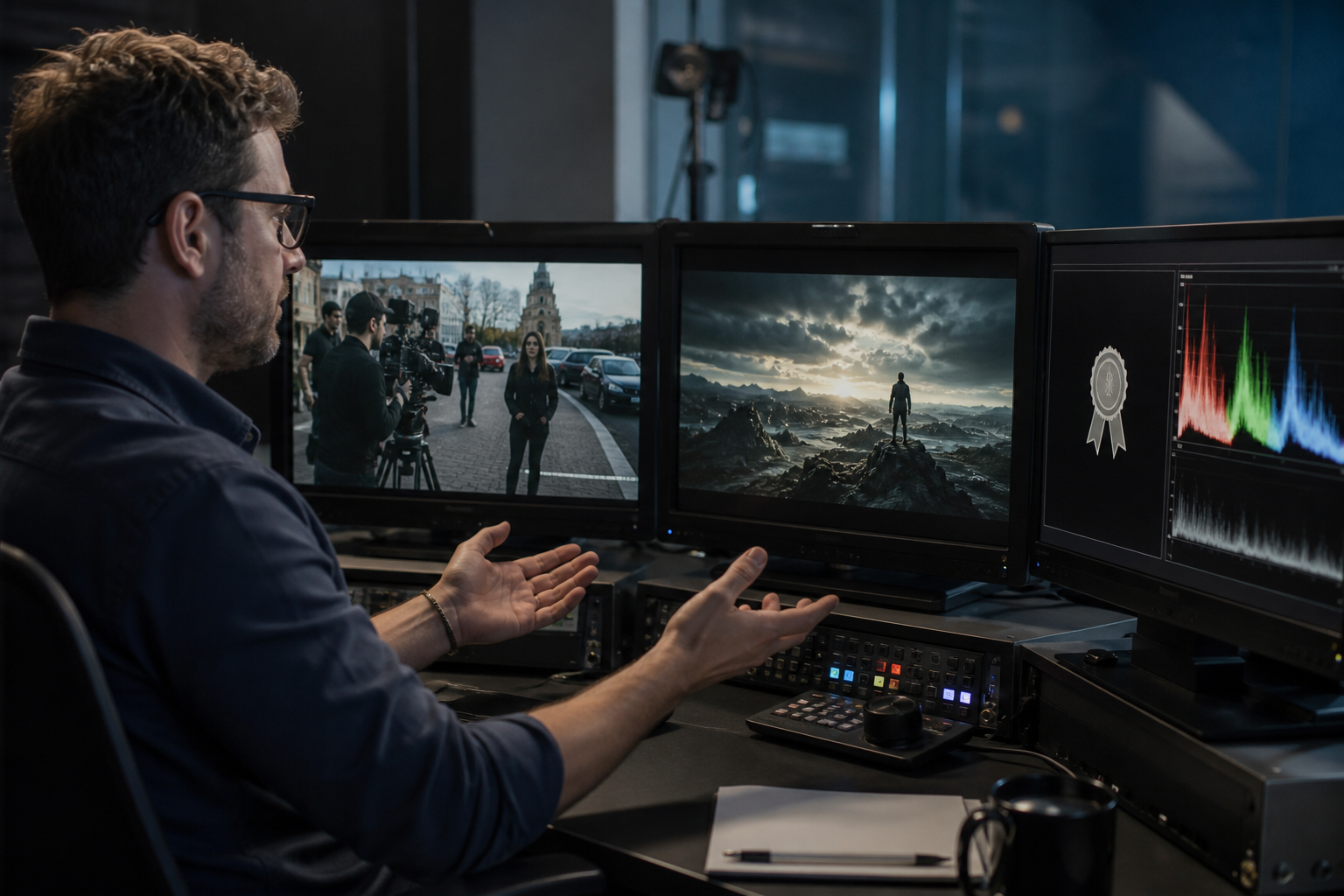
- AI will not replace human creativity. It automates execution and suggests options, but originality, taste, and intention remain human.
- AI videos can look highly realistic, yet they still struggle with fine details, physics, and coherent long-form narrative without human guidance.
- Jobs will change, not vanish. AI has displaced translators and other technical-only roles, but video editing still demands creative intuition, emotional nuance, and client judgment. New roles include prompt specialists and synthetic-media compliance officers.
- Most AI video tools are beginner-friendly; if you can type a prompt, you can produce a draft clip. You do not need a studio budget.
- Human oversight is mandatory. Wikipedia banned AI-generated content in March 2026 because of factual errors and hallucinations, underscoring that verification is non-negotiable.
- The strongest 2026 workflows combine generative and deterministic video. Use AI for hero footage and B-roll; use video-as-code for repeatable branded elements, lower thirds, and data animations.
Why These Myths Matter Now
AI-generated video crossed a credibility threshold in 2025–2026. A Columbia University report cited by VideoGen notes that AI videos have become "so realistic that humans (and existing detection systems) struggle to distinguish between real and fake videos." That realism is exciting for creators and alarming for everyone else. It also created a fog of myths: AI will replace directors, AI video is always fake-looking, AI will end creative careers, AI output needs no human checking, and AI video is only for studios with Hollywood budgets.
The stakes are real. Misleading AI footage can spread misinformation, violate likeness rights, and erode trust in journalism. At the same time, rejecting AI entirely means missing a tool that can accelerate editing, lower production costs, and make visual storytelling accessible to more people. The goal of this guide is to separate myths from facts so you can use AI video responsibly.
"I believe intentionality plays an important role in human creativity. All human creatives consciously decide to pick up a paintbrush or start typing on a keyboard."
— Mark Runco, director of creativity research, Southern Oregon University, via BrainFacts
Myth 1: AI Will Replace Human Creativity
Agility PR Solutions, Visionary AI Studios, and VideoGen all list this as the most common myth. The reality is that AI can generate variations, automate cuts, and suggest visual styles, but it does not originate a compelling idea, choose the emotional tone, or decide what a story means.
BrainFacts puts this in neuroscientific terms. Human creativity relies on preparation, incubation, insight, and verification across multiple brain networks. Mark Runco, director of creativity research at Southern Oregon University, told BrainFacts that "intentionality plays an important role in human creativity." An AI responds to a prompt; a human decides to pick up a camera or a pen in the first place.
The practical truth: AI is a collaborator, not a replacement. It can trim hours from editing, generate B-roll, or create storyboard variations, but the creative decisions still belong to the human director. Visionary AI Studios frames AI as a creative partner that handles editing, color correction, and initial drafts while humans make final creative decisions.
Myth 2: AI Videos Look Robotic and Unnatural
Early AI video was easy to spot: melting limbs, jittery backgrounds, and faces that slid off skulls. Modern models have improved dramatically. VideoGen correctly notes that today's outputs can be "natural-looking, smooth, and polished," especially for short clips with controlled camera movement.
That said, realism is not uniform. AI still struggles with complex physics, consistent hands, multi-scene narratives, and logical continuity over time. A 60-second AI clip may look cinematic in isolation but fall apart when cut into a longer story. Human editors remain essential for quality control.
Watch for these tell-tale signs that a clip may be synthetic:
- Fingers or limbs that merge, duplicate, or vanish between frames.
- Backgrounds that shimmer or drift even when the camera is locked.
- Text that appears garbled or changes from shot to shot.
- Objects that violate basic physics, such as floating shadows or reversed reflections.
- Facial features that subtly shift in group shots.
These artifacts do not mean AI video is useless; they mean it still needs a human eye before publication.
Myth 3: AI Will Steal All Creator Jobs
The World Economic Forum paper cited by VideoGen predicts that generative AI will "transform business and the nature of work, displacing some existing jobs… enhancing others, and ultimately creating many new roles." That is a transformation, not an extinction. The relevant question is which tasks get automated and which skills become more valuable.
A useful warning comes from the translation industry. AI translation tools have drastically reduced demand for human translators in many sectors, displacing workers whose job was primarily technical conversion. Video editing is different because it demands visual literacy, pacing intuition, collaboration with directors, and ethical judgment — skills current AI lacks. However, editors who only perform technical cutting are more vulnerable than those who bring creative vision and client management.
AI video tools already create new workflows: repurposing long videos into short clips, generating multilingual subtitles, producing quick explainer drafts, and testing concepts before committing to a full shoot. New roles are also emerging, including AI prompt specialist, synthetic-media compliance officer, AI-assisted video editor, and localization producer. A 2025 No Film School experiment found that using AI for initial assembly cut editing time by 40%, but the final polish still required a human editor. Creators who adopt these tools can publish more often and spend more time on strategy, audience engagement, and original ideation. The jobs that shrink are the ones that consisted entirely of repetitive technical labor.
Myth 4: AI Video Tools Are Too Complex
Visionary AI Studios and VideoGen both debunk this. Most consumer AI video platforms are designed for non-editors: type a prompt, choose a style, and receive a clip. CapCut Commerce Pro and similar tools offer drag-and-drop templates, preset effects, and automated captions. As VideoGen puts it, "If you can type, you can use AI video generators."
Advanced use cases—custom model training, frame-locked animation, hybrid compositing—do require skill. But the entry point is far lower than learning Premiere, After Effects, or DaVinci Resolve from scratch. Complexity scales with ambition, not with basic use. For educators, marketers, and small-business owners, the learning curve is closer to learning a new app than a new profession.
Myth 5: AI-Generated Video Needs No Human Oversight
This myth is the most dangerous. AI models hallucinate. They can invent logos, distort faces, misrepresent real events, and generate footage that looks authoritative but is false. Agility PR's myth list emphasizes that AI tools still require human input for final adjustments and storytelling.
Real-world evidence arrived in March 2026, when Wikipedia officially banned AI-generated content. The platform found that AI models frequently introduced factual errors, hallucinations, and subtle biases, so it now relies on human editors to detect and correct bot-produced material. The same logic applies to video: AI can suggest transitions or captions, but a human must verify that the final product is accurate and non-misleading.
Responsible creators should follow three rules:
- Verify everything. Check faces, text, logos, and background details against source material.
- Disclose AI use. Label synthetic footage when publishing, especially in news, education, or marketing.
- Respect rights. Do not use AI to clone real people or imitate protected characters without permission.
Human oversight is not a formality; it is the difference between useful AI video and misinformation. Platforms, audiences, and regulators are all moving toward stronger transparency requirements, so building a disclosure habit now protects your reputation later. Brands that label synthetic footage clearly tend to retain more trust than those caught hiding AI use after the fact.
Myth 6: AI and Human Video Are Fundamentally the Same
They are not. Human video begins with intention, experience, and ethical judgment. AI video begins with training data and a probability distribution. The outputs may look similar, but the processes and responsibilities differ.
| Dimension | Human Video | AI-Generated Video |
|---|---|---|
| Origin of idea | Lived experience, intent | Prompt + training data |
| Originality | Can be genuinely novel | Statistical remix |
| Quality control | Human judgment at every stage | Requires human verification |
| Legal/copyright | Clear authorship | Complex, jurisdiction-dependent |
| Best used for | Documentary, journalism, art | Concepts, drafts, augmentation |
Soup.io's guide on AI vs human creativity makes a similar point: AI excels at speed and variation, while humans excel at nuance, context, and meaning. The best productions combine both.
Myth 7: AI Video Is Only for Big Studios
Visionary AI Studios explicitly debunks the idea that AI is only for large productions. In reality, AI video tools are increasingly accessible and affordable, catering to productions of all sizes. Many are subscription services with free tiers, making them available to independent filmmakers, small businesses, educators, and solo creators.
VideoGen points out that companies, influencers, and educators are already integrating AI videos into daily content routines. Whether you are making a tutorial, a social media reel, a product demo, or a pitch video, AI can reduce the technical lift. A 2024 B2B video survey found 84% of marketers used video in 2023, up from 75% in 2022. AI tools are part of why that growth is sustainable: they lower the cost and skill barrier for consistent publishing.
This does not mean AI replaces professional production for high-end film or broadcast. It means AI is now a legitimate tool in the creator economy, not just the studio economy.
A Responsible AI Video Workflow for Solo Creators
If you are a solo creator, marketer, or educator, here is a practical workflow that keeps you fast and ethical:
- Define the goal. Decide whether AI is the right tool for the job. Use it for drafts, B-roll, voiceovers, and localization; avoid it for documentary footage or anything that claims to depict real events.
- Write a precise prompt. Include style, camera movement, mood, and duration. The more specific you are, the less cleanup you need.
- Generate variants. Produce 3–5 drafts rather than accepting the first output. Curate the best one.
- Inspect frame by frame. Look for hands, text, logos, physics errors, and continuity glitches.
- Edit in a traditional NLE. Cut, pace, color grade, and add sound design in Premiere, DaVinci Resolve, or CapCut.
- Disclose and archive. Label AI-generated segments and keep original prompts and source files for your records.
This workflow treats AI as a pre-production and augmentation layer, not a final-product button. It preserves your creative voice while giving you speed.
The Jobs AI Has Already Changed — And What It Means for Video
AI's impact on work is not theoretical. Translation roles have already been reshaped by AI tools that handle routine conversion faster and cheaper than humans. The lesson for video is not that editors will disappear, but that technical-only tasks will commoditize. If your value is limited to cutting on cues, applying presets, or syncing audio, AI can do those things faster.
The editors who thrive will be the ones who combine technical skill with creative judgment. That means understanding narrative arc, emotional pacing, audience context, and ethical implications. It also means learning to direct AI tools: writing better prompts, selecting the right model, inspecting output for errors, and integrating AI-generated material into a coherent final piece. In 2026, "AI prompt specialist" and "synthetic-media compliance officer" are real job titles, not buzzwords.
Businesses should follow a simple rule: harness AI for speed, invest in humans for quality. A workflow that uses AI for transcription, rough cuts, and multilingual captions, then hands the final edit to a human, delivers both efficiency and creative integrity. A workflow that tries to remove the human entirely usually delivers generic, error-prone content that damages brand trust.
Hybrid 2026 Workflows: Generative + Deterministic Video
The best productions in 2026 do not choose between AI generation and traditional production — they combine them strategically. Generative video wins when you need something that looks filmed or imagined: a realistic product scene, a dreamlike sequence, or B-roll you do not have footage for. Deterministic "video as code" wins when the output must be exact, on-brand, and repeatable: titles, lower thirds, data animations, and weekly series intros.
Think of a marketing video. The hero shot might come from a generative model that creates a cinematic product scene. The branded intro, captions, lower thirds, and end-card call-to-action come from a deterministic template that ensures consistency across every video in the campaign. The result is faster than a full manual production and more controlled than a fully generative one.
This hybrid approach also makes oversight easier. Because the repeatable elements are locked in code or templates, you only need to verify the generative segments for accuracy, rights, and disclosure. It is the production model that best balances speed, brand safety, and creative flexibility in 2026.
Frequently Asked Questions
Will AI replace video editors?
No. AI can automate repetitive tasks like trimming, captioning, and generating rough cuts, but professional editors still provide creativity, pacing, and quality control.
Can AI videos look truly realistic?
Yes, for short clips and controlled scenes. However, AI still struggles with long-form consistency, complex physics, and fine details such as hands and text.
Do AI video tools require coding skills?
No. Most consumer tools are prompt-based and beginner-friendly. Advanced customization may require more technical knowledge, but the basics are accessible to anyone.
Are AI-generated videos legal to monetize?
It depends on platform policies, copyright status of training outputs, and disclosure requirements. Always review the terms of service and label synthetic content where required.
Who owns the copyright to AI-generated video?
Copyright law for AI-generated content varies by country and is still evolving. In many jurisdictions, purely AI-generated works receive limited or no copyright protection. Human creative input strengthens a claim.
Can AI match human creativity?
Current AI can emulate some creativity tests and produce novel combinations, but researchers such as Mark Runco and Selmer Bringsjord argue that intentionality and true originality remain human traits.
Should I disclose AI use in my videos?
Yes. Disclosure builds trust and is increasingly required by platforms, employers, and advertising regulators. Label synthetic footage clearly, especially in news, education, and marketing.
Is AI video only for big studios?
No. Subscription-based AI video tools have made professional-looking video accessible to solo creators, small businesses, and educators. Many tools are prompt-based and cost less than traditional production equipment.
What is the difference between generative and deterministic video?
Generative video uses AI models to create new footage from prompts or images. Deterministic video, sometimes called video as code, uses templates, scripts, and design systems to produce exact, repeatable output. The strongest workflows combine both: generative AI for hero footage and B-roll, deterministic systems for branded titles, lower thirds, and data animations.
Did Wikipedia really ban AI-generated content?
Yes. Wikipedia banned AI-generated content in March 2026 because AI models frequently introduced factual errors, hallucinations, and subtle biases. The platform now relies on human editors to detect and correct bot-produced material, reinforcing that human oversight is essential for trustworthy content.
Where can I learn more about AI video?
Explore our Video, Film & Visual AI cluster, the parent AI Media, Culture & Entertainment pillar, and related articles such as Best AI Horror Generators and CGI vs AI.
Conclusion: Keep the Human in the Loop
AI video generation is a powerful tool, but it is not a replacement for human creativity, judgment, or ethics. The myths that matter most—replacement, infallibility, equivalence, and exclusivity—fall apart under scrutiny. AI can help you edit faster, prototype cheaper, and reach audiences in more languages, but the story, the strategy, and the responsibility remain yours.
Use AI as a collaborator, verify its output, and disclose when content is synthetic. The most resilient 2026 workflows combine generative AI for creative footage with deterministic systems for repeatable, branded elements. If you want to keep exploring the boundaries of AI and video, visit our Video, Film & Visual AI cluster and the parent AI Media, Culture & Entertainment pillar.